
Test scope, screenshots, checkpoint findings and tier rationale were supplied by an identified reviewer. Identity is retained internally unless public attribution is explicitly enabled.

e-commerce, education · South AfricaFull evidence record
Campus Trade
Campus Trade is a South African student marketplace for listing, buying and selling goods, with platform transaction fees applied to successful sales.
Sandbox Africa checked the submitted evidence and promoted the verified checkpoint record. Any visible adjustment is identified rather than silently rewritten.
The official public tier and technical record below are the verified publication outcome.
Tier 2 — Market-Ready
Verified tier differs from submissionDowngrade to Tier 2. The platform is market-ready, but Tier 3 should be reserved for demonstrated enterprise-grade scale, integration and governance rather than product completeness alone.
Strongest supporting evidence
The strongest observation is that the core marketplace exists within the product itself and has evidence of real transaction activity. The platform displays actual listings across categories such as textbooks, calculators and accessories. User profiles show marketplace reputation, listings and items marked SOLD, providing evidence beyond static demonstration content. The platform has defined buying and selling mechanisms, including buy requests, payment and seller payment processes. Campus Trade charges sellers a fee on successful transactions, and its published refund policy addresses failed or reversed sales. Registration is self-service and functional, with student status and university information captured during onboarding. This supports the conclusion that Campus Trade is an operational marketplace rather than merely a landing page, catalogue or concept.
Why the next tier is not yet supported
Campus Trade qualifies for Tier 3 because it demonstrates a live, functioning student marketplace with actual listings, user accounts, buyer/seller workflows and evidence of completed or historical marketplace activity.
Verified findings and limitations
Direct review observations
The intern exercised marketplace account and listing/browsing functionality and found a substantive product, but the evidence did not establish enterprise-grade controls or integrations.
Independent verification
Current Campus Trade support content continues to describe active registration, buying, listing and seller transaction fees.
Observed issues
No critical core-loop failure was identified, but the evidence is consistent with a consumer marketplace rather than enterprise infrastructure.
Testing limitations
Scaled transaction performance, fraud operations, payout reconciliation, integration documentation and formal security assurance were not independently audited.
What was actually assessed
Workflows tested The assessment focused on the student-facing marketplace and account-registration experience. The following workflows were tested: Accessed the Campus Trade website. Reviewed the public-facing marketplace and navigation. Inspected available product categories and example listings. Reviewed marketplace areas such as Discover and My Library. Accessed the Create Account registration flow. Reviewed the information required for registration, including name, email, student status, password and discovery source. Tested the registration process and observed the email-verification requirement. Reviewed the login/account functionality available to users. Assessed whether the platform presented an operational marketplace rather than a “Coming Soon” or informational landing page. Roles used The primary role assessed was the student/user role, representing a tertiary student who could potentially use Campus Trade to purchase or sell educational resources. The assessment considered both sides of the marketplace proposition conceptually—buyer and seller—but did not independently validate a completed buyer and seller transaction. Purposefully left out of scope Completion of an actual purchase. Completion of an actual sale/listing transaction. Payment processing or payment-provider integrations. Delivery, fulfilment or logistics. Buyer–seller communication after a transaction. Refunds, cancellations or dispute resolution. Seller payout processes. Marketplace liquidity or transaction volume over time. University/student-status verification beyond the information requested during registration. Security penetration or vulnerability testing. Performance/load testing and scalability. Backend/API architecture and integrations. Detailed assessment of privacy or regulatory compliance. Long-term repeat usage or retention. Independent verification of historical claims or dated content beyond noting its presence.
Environment / device / browser
Huawei mobile browser
Account or access type
demo student account
Access limitations
no material access denied
What was observed
These images formed part of the evidence pack considered during verification. Full-standard records retain the contributor's factual caption for each screenshot.
Seven checkpoint assessment
The verified result is the official public checkpoint record. For earlier-standard reviews, these findings may have been reconstructed from preserved evidence during Sandbox Africa’s 2026 audit; they are not presented as if the contributor originally completed a structured worksheet. Contributor-submitted checkpoint wording is shown only where explicit public reviewer attribution has been enabled.
Step 1 — The Existence & Accessibility Check
Is it live?
Checking for dead links, infinite loading screens, or "Coming Soon" landing pages masquerading as live products.
Sandbox verifiedpass
Campus Trade should be classified as live. It is not merely a marketing or “Coming Soon” site: there is evidence of an operational marketplace with real listings, user profiles, account functionality and transaction-related workflows.
Onboarding friction
Can a user or enterprise actually sign up, or is it gated behind broken "Contact Sales" forms?
Sandbox verifiedpass
Campus Trade demonstrates low-to-moderate onboarding friction. Users can directly create accounts without a “Contact Sales” gate or registration fee, providing a genuine self-service entry point. The main friction comes from the information required during registration and the additional email-verification step before full functionality is available. Overall, onboarding is functional and accessible rather than artificially gated.
Step 2 — Functional Testing (The "Try It Out" Phase)
Core loop execution
Does the application actually do what it claims to do? (e.g. a payment gateway completing a test transaction, a logistics app's routing engine working.)
Sandbox verifiedpartial
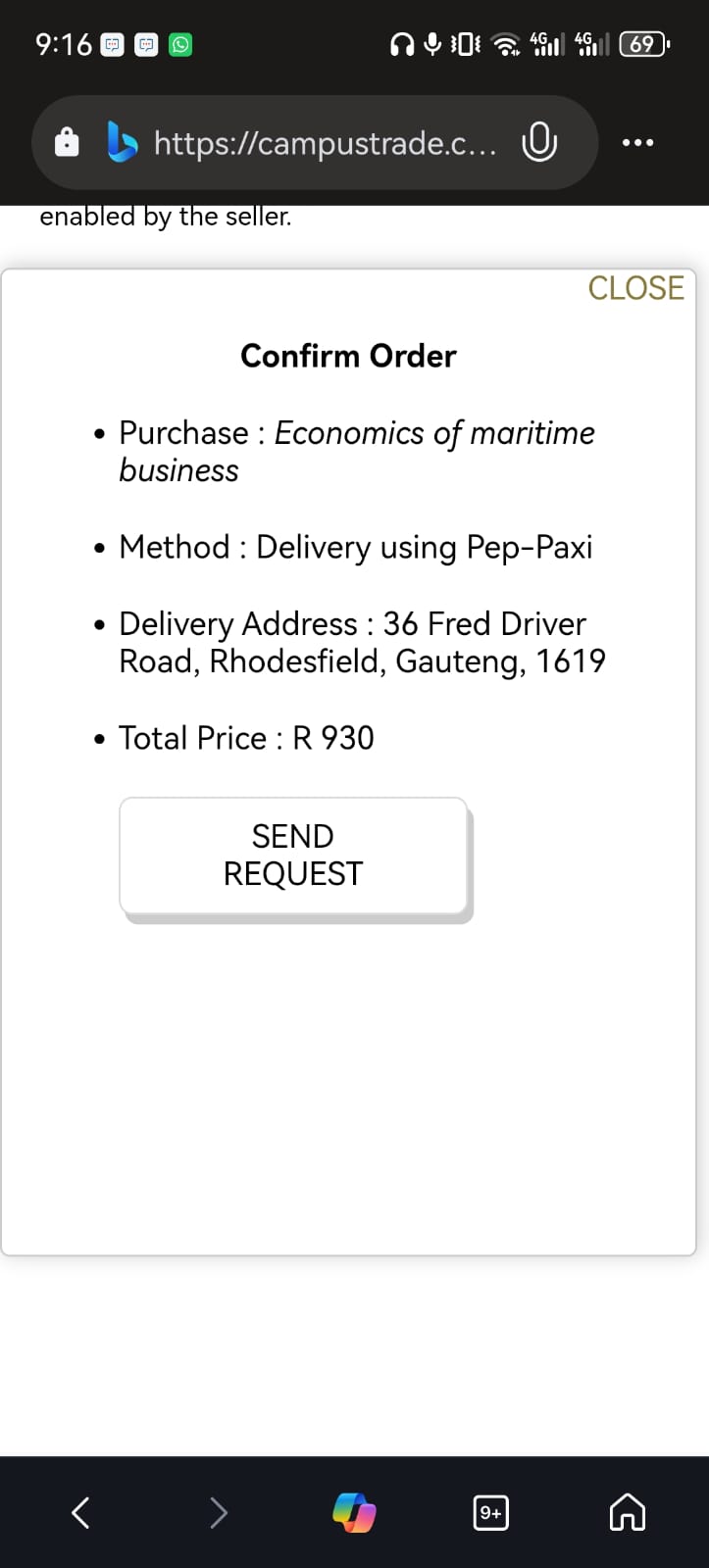
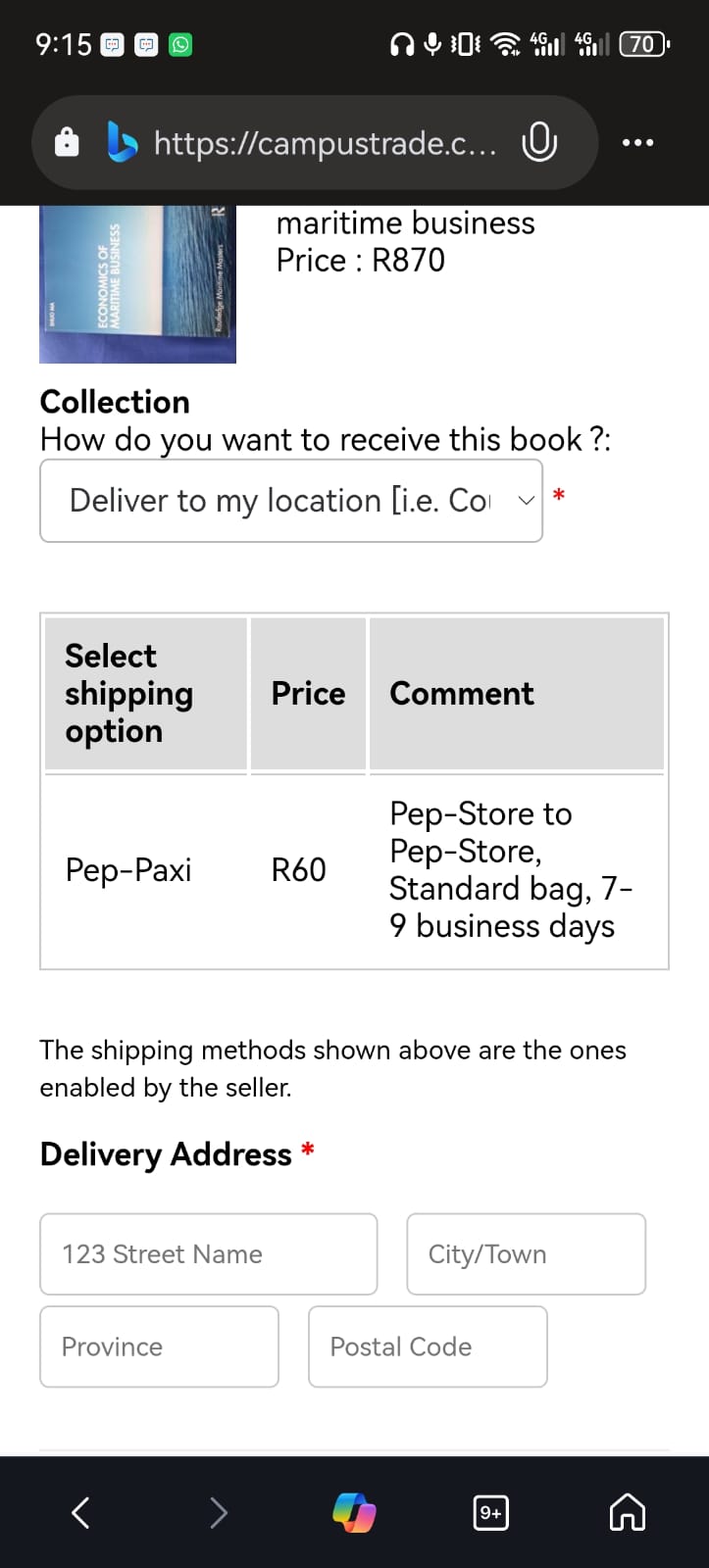
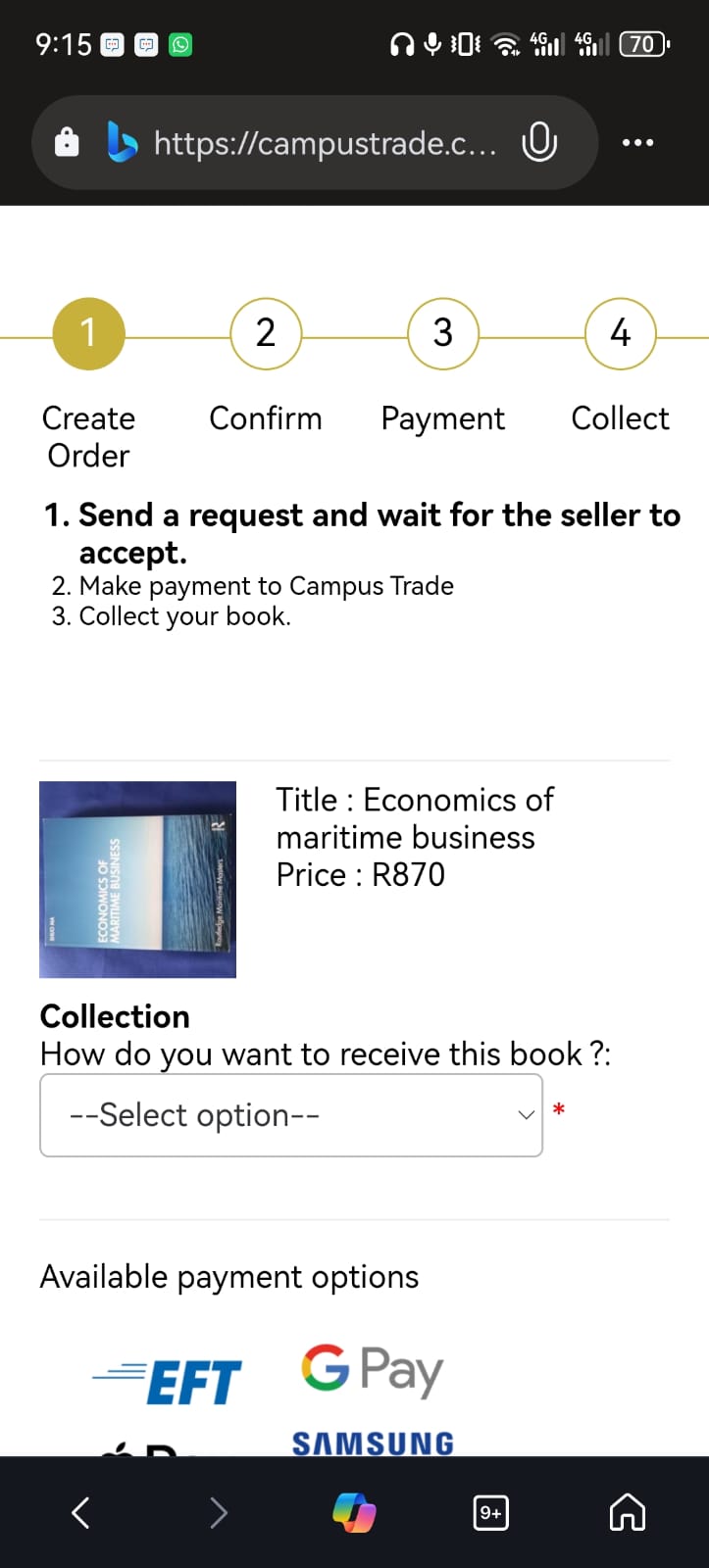
Campus Trade's core loop is substantially evidenced: users can discover real listings, access purchase actions, initiate a purchase request, and the platform provides mechanisms for payment and fulfilment. Sold listings and transaction-related functionality provide evidence of real marketplace activity. However, because a live purchase/payment/fulfilment transaction was not independently completed as part of this assessment, the full end-to-end transactional loop is not fully validated.
User experience (UX) & interface (UI)
Assessing the logical flow, responsiveness, and basic accessibility of the platform.
Sandbox verifiedpartial
Campus Trade demonstrates a functional plain and logically structured UX/UI. Core marketplace tasks are clearly represented, product information is presented in a useful format, and the navigation supports discovery and purchasing actions. However, legacy-looking elements and some interface inconsistencies reduce the overall level of polish. The platform therefore demonstrates functional usability rather than a highly refined or best-in-class user experience.
Step 3 — Technical & Architectural Assessment
Performance
Load speeds, uptime reliability, and basic stress responses.
Sandbox verifiedpartial
Campus Trade demonstrates adequate observable performance for basic use: the main website and marketplace functionality are accessible and operational, with no major performance failure evidenced in the assessment. However, there is insufficient evidence to validate sustained uptime, quantitative load speeds or behaviour under stress. The platform should therefore be rated as functionally responsive but performance maturity remains unverified.
Integration readiness
Availability, clarity, and functionality of API documentation and webhooks.
Sandbox verifiedpartial
Campus Trade should be rated Low for integration readiness. Although a technical documentation page exists, the publicly available material does not expose clear API documentation or webhook functionality. The platform therefore demonstrates internal product integrations but not a developer-ready external integration layer. Editorial proposal adjusted from not_assessed to partial using current independent verification and the established gated-product/safety-critical rules.
Verification adjustmentSecurity basics
SSL certification, basic encryption standards, and data handling transparency.
Sandbox verifiedpartial
Campus Trade demonstrates basic security hygiene through HTTPS, password-based authentication, email verification and published privacy/data-processing terms referencing POPIA. However, the assessment found insufficient evidence to validate deeper technical security controls or current security maturity. The platform should therefore be rated as basic/partially evidenced rather than strongly security-validated.
Company right of reply
Claim company profile
Represent Campus Trade?
Claiming verifies company ownership and enables a response or additional evidence. It does not permit editing of the independent review.